“Adrian Rodda is a rising star on the Beechworth scene. His close work with Mark Walpole of Fighting Gully Road has helped Rodda rapidly rise to the ranks of the region’s elite. While Rodda crafts a range of wines, his finest touch is no doubt with Chardonnay from Beechworth and other parts of Victoria. His winemaking avoids overt intervention, except for regular early sulfuring to prevent malolactic ferments in Chardonnay. Though he comes from a winemaking background, Rodda spends plenty of time in the vineyards, particularly Smiths, from which he sources much of his fruit. | particularly like the personality in these wines. They are uniquely situated at the subtle end of the spectrum, indicative of a confident winemaker who is very comfortable in his own skin and knowns exactly how to get where he wants to go.”
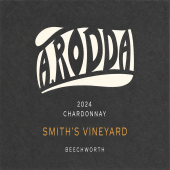
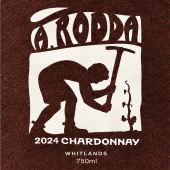
“Adrian Rodda is a rising star on the Beechworth scene. His close work with Mark Walpole of Fighting Gully Road has helped Rodda rapidly rise to the ranks of the region’s elite. While Rodda crafts a range of wines, his finest touch is no doubt with Chardonnay from Beechworth and other parts of Victoria. His winemaking avoids overt intervention, except for regular early sulfuring to prevent malolactic ferments in Chardonnay. Though he comes from a winemaking background, Rodda spends plenty of time in the vineyards, particularly Smiths, from which he sources much of his fruit. I particularly like the personality in these wines. They are uniquely situated at the subtle end of the spectrum, indicative of a confident winemaker who is very comfortable in his own skin and knowns exactly how to get where he wants to go.”
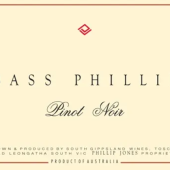
“One of the most heralded boutique wineries in Australia, Bass Phillip was sold this spring to a group of international investors, including Burgundian Jean-Marie Fourrier and former investors in Robert Parker Wine Advocate. Iconoclastic founder Phillip Jones will remain for an undisclosed period as a consultant, but at age 74, he had been looking to sell the winery for the past few years. The 14-hectare property is located in Gippsland, Victoria, southeast of Melbourne, and has been farmed organically (since 1993) and biodynamically since 2002, although without being certified. The plantings are relatively dense, with as many as 9,000 vines per hectare, and yields approximate 1 to 1.5 tons per acre. Up to 60% new oak is used in the Estate Pinot Noir, with the Chardonnays seeing 20% new oak (all French). There’s an emphasis on natural acidity and delicate handling in the winery—avoiding pumps for example, which Jones claimed damaged the texture of his wines when I last spoke with him three years ago. None of the 2018 Pinots were filtered, and all are somewhat cloudy in the glass. Under the new ownership, expect to see a push for higher visibility outside Australia.”
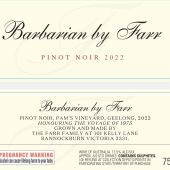
“Gary Farr is something of a legend in his own time in the Australian wine scene. He made his name as the winemaker at Bannockburn Vineyards since its inception in the late 1970s, forging the distinctive Pinots that put this great property on the map. Meanwhile his passion for Burgundy drew him to that region where he racked-up no less than 13 vintages working at Domaine Dujac. For many years he eyed the property next to Bannockburn Vineyards before finally purchasing 90 acres of the neighboring farmland, though only a small proportion has yet been planted to vine. The “House Block” plantings of Shiraz, Viognier and Chardonnay began in 1994. Then isolating the most promising Pinot Noir sites, three single vineyard plots were planted on varying soil types: Sangreal (red loam / pink clay over limestone, planted in 1995 at the House Block), Farrside (black volcanic topsoil with a limestone base) and Tout Pres (2.5 acres on a variety of free draining soils with limestone in the profile). Tout Pres is the most densely planted at 8000 vines per hectare, hence the name. Rather predictably, it was not long before Farr decided to part ways with Bannockburn Vineyards. Rumors abound throughout Victoria as to what caused the ensuing rift; though I suspect that the major factor involved was no more salacious than Farr’s strong desire to do his own thing and the competition it created. 1999 was the first vintage of By Farr wines to be released. I was taken through the By Farr vineyards after harvest in 2011 by Gary Farr’s very talented son Nick who has joined him in the winery, assuming greater responsibility and making his own “Farr Rising” label (see separate review). There aren’t many wineries in Australia as pristine as By Farr. Everything is naturally made and hands-off in the winery, right down to the use of corks and non-filtration for the reds, with varying proportions of whole-bunch inclusions in the Pinots depending upon the vintage. These are very exciting wines that are well worth seeking out and should go from strength to strength as the vines continue to mature.”
“This finely crafted 2019 Syrah Genesis is quite beautiful and enthralling with its cherry liqueur, dried flower and peppery spice aromas, along with a dusting of shaved jamon. Flavors swerve more toward black olive, earth and roasted spices, with wafts of cranberry and cherry never far away. A backbone of perky acidity and plush tannins illustrates a mid-term proposition. Drinking window: 2026-2033. 93 points”
We use cookies to ensure that we give you the best experience on our website. If you continue to use this site, we will assume that you are happy with it.